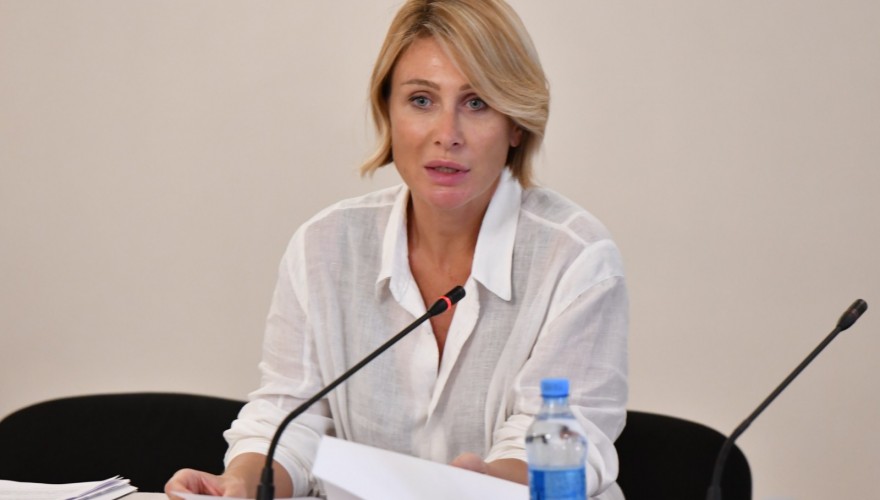
Environmental Protection and Natural Resources Committee Endorsing Postponement of Sundry Obligations under Waste Management Code
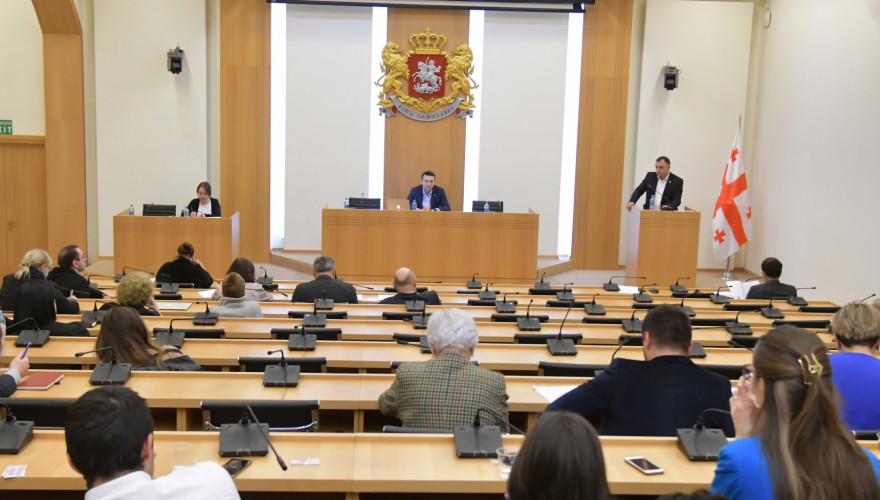
The Committee, presided by the Chair Kakha Kuchava, discussed several Bills with the I reading.
One of the rapporteurs, Gogi Meshveliani introduced the Bill on Amendments to the Waste Management Code initiated by the Committee. The Bill envisages postponement of sundry obligations under the Code, namely until January 1, 2025 instead of January 1, 2020 as it turned out that our entrepreneurs are in fact not ready to meet those requirements.
Thus, the Bill enables the natural persons and legal entities producing up to 2 tons of non-hazardous wastes and up to 120 kg of hazardous wastes to prepare for the obligations under Articles 14, 15 and 29 of the existing Code covering a waste management plan for the company, as well as the definition of an environmental manager and the accounting of waste.
These companies are not yet fully prepared to comply with the requirements of the Code, such as the appointment of an environmental manager, development of a waste management plan, accounting and reporting. In addition, the requirements of the Waste Management Code apply to all waste producing entities. Those companies, even though they produce less than 120 kg of hazardous waste or less than 2 tons of non-hazardous waste, are obliged to manage the waste generated by their activities in accordance with the requirements of waste management legislation and any failure thereof will result in penalty sanctions. However, as the proposed amendment does not apply to some of the commitments set out in the aforementioned articles of the Law, the penalties provided for in Articles 42, 43 and 44 0.1.1shall not be applied to these companies.
According to Kakha Kuchava, following the consultations with the Government, the parties considered the decision on extension of the term for 5 years to be reasonable, thus enabling the companies to properly prepare themselves for the requirements within this timeframe.
One of the initiators, Zaza Khutsishvili introduced the Bill on Pet Welfare along with accompanying drafts for the I reading. The Bill was initially drafted by the preceding Parliament though failed to be discussed and adopted. Thus, a working group was set up to refine the draft law, the results of which were presented at today's sitting.
Zaza Khutsishvili briefed colleagues and representatives of NGOs working in the field of animal protection on the ongoing work process and introduced the lawyers' comments on the basic principles of the Bill.
As the rapporteur stated, the Bill has been developed to properly treat, care, protect and manage the population of pets. The fact that there are about 40,000 tramp dogs in Tbilisi today confirm the acuity of this issue that can be even worsened over time of inactivity.
According to the initiator, this Bill covers several aspects of the human-pet relationship and clearly spells out the issues related to the breeding and dog mortality - euthanasia, dog slaughter, etc.
The remarks were also made during the sitting. Finally, it was agreed that the main purpose of the draft law on the one hand is to protect human rights and security and, on the other hand, to protect animal life and health by maintaining a reasonable balance.
The Bill was initiated by MPs Kakhaber Kuchava, Zaza Khutsishvili, Otar Danelia, Endzela Machavariani, Giorgi Gachechiladze, Koba Lursmanashvili, Sulkhan Makhatadze, Gogi Meshveliani, Levan Koberidze and Giorgi Khatidze.
The Deputy Minister of Economy and Sustainable Development Nino Enukidze also introduced for the I reading the Bill on Amendments to the Law of Georgia on State Property, which is a legislative initiative of the Government.
According to the rapporteur, the Bill deals with a very acute topic. "We strive to maximize investment in the minerals sector and provide existing investors with the opportunity to recycle minerals in parallel with the extraction”, - she noted.
According to her, the initiative envisages the direct transfer of the land plot under the permit of extraction of minerals provided that the processing plant will be built. Ownership of land will automatically be tied to the term of the license for extraction of minerals. Cancellation of the license will be a direct basis for the cancellation of the contract on such land. This will in a way promote and encourage employment in local Governments, attract investment, etc. Under this initiative the maximal volume of the land plot that can be transferred to the investor is up to 3 ha.
Hence, as the initiators of the Bill believe, the adoption of the draft law will eliminate the barrier that the license holder may face while carrying out mining activities. Following the adoption of the Bill, the license holder will enjoy the possibility to be transferred the land plot without the auction under the Civil Code of Georgia for a period of up to 49 years. The transferred state property as well as the in-place infrastructure shall be subject to the sole use of processing the extracted minerals.
The Committee approved all the three Bills.