Shalva Papuashvili: the Parliamentary Majority initiates new Rules of Procedure
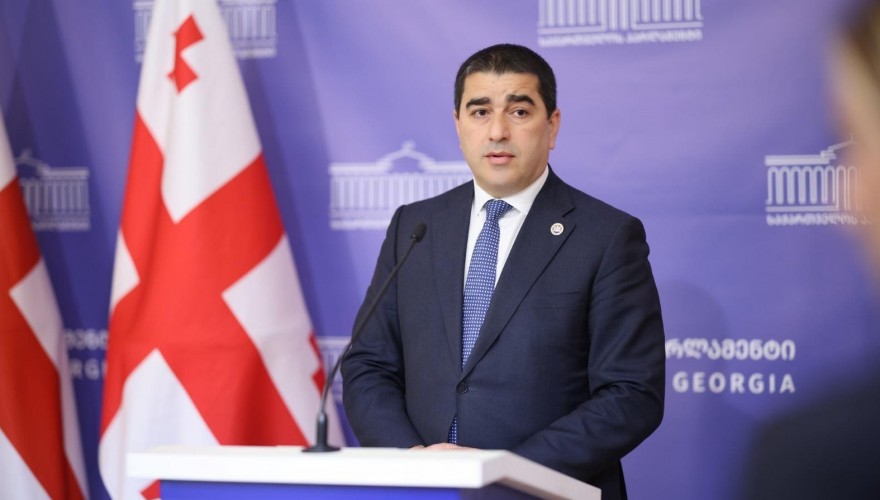
"The Parliamentary Majority has introduced new Rules of Procedure. The draft document will be discussed by the Bureau on Monday and subsequently promulgated for further parliamentary considerations. We also schedule the adoption of new Rules of Procedure as of the end of May with the effective date of July 1, 2025”, - the Speaker, H.E. Shalva Papuashvili announced at the briefing today.
The Speaker reviewed the key modifications in the Draft Rules of Procedure, particularly the interpellation, which will be doubled during the session.
"The frequency of interpellations is being doubled. As you are aware, interpellations are the instruments through which Members of Parliament direct their questions to Ministers, the Prime Minister, and other accountable officials. The respective officials are invited to Parliament to answer the questions within the plenary session, followed by the debates. Two years ago, we increased the interpellation frequency to four during the whole session. Now, we double the existing frequency, conducting the interpellation every session week.
Additionally, we plan to reformulate the debate protocols after the accountable officials deliver their reports, which previously operated on a monologue basis. The factions have enjoyed their time without engaging in debates. Under new regulations, the Factions will speak in an alternate process, which will make the debates more dynamic. Correspondingly, the interpellation will become more relevant”, - he stated.
As the Speaker pointed out, the establishment of novel interpellation procedures is undermining the “Ministerial Hour,” which was introduced in 2018 as a means of compensating for interpellations.
Another amendment regulates the Interim Commissions.
"Today, we attend to the hearings of the Interim Commission. However, the Constitution also stipulates that other Interim Commissions may be established without the fact-finding functions on any paramount matter. This Constitutional instrument has never been practically applied in the Parliament. Instead, other instruments were used, not prescribed under the Constitution, specifically the Standing Councils, Thematic Inquiries, etc., which have replaced the former. Although the Constitutional instrument remains available, its use has been precluded due to the primary reason that two or three Articles of the Rules of Procedure were allocated to other interim commissions. The references therein essentially indicate the regulations governing the fact-finding commission, thereby complicating the establishment of this commission. Consequently, we established rules for the set-up of the interim commission to be flexible, straightforward, and comprehensible”, - the Speaker stated.
According to him, the establishment of the interim commissions in line with new regulations replaces the standing councils.
"Pursuant to the last amendment to the Rules of Procedure, the Gender Equality Council is being annulled. At that, the new Rules of Procedure also annuls the Council on the Rights of Children, and the Open Governance Parliamentary Council.
All standing councils are being abolished, as they, to some extent, replicated the Committees, not even being Committees. Instead, we introduce a flexible instrument—an interim commission—which may be established on the occasion of the same matters as councils. We intend to, after the enactment of the new Rules of Procedure, establish the Interim Commission on Women and Child Rights”, - the Speaker underlined.
Per his information, yet another amendment pertains to the working groups.
“The recently implemented revised Rules of Procedure restore the traditional format of the Working Groups. Following the modifications implemented a few years ago, the logistical and bureaucratic aspects of the Working Groups closely resembled the Committee’s activities. Consequently, the Working Groups have effectively ceased to function, despite the necessity of the format for unofficial discussions and deliberations. Therefore, the original format of the Working Group will be restored, replacing the thematic inquiries”, - The Speaker elucidated.
The Draft Rules of Procedure also is related to the legal proposal.
The revised Rules of Procedure significantly enhance the efficiency of the legal proposal process. During the last two convocations of Parliament, approximately 700 legal proposals were submitted, only nine of which were ultimately finalized into law. This indicates that a staggering 99% of the submitted initiatives remain unfulfilled. Consequently, we modify the system, specifying that every Member of Parliament shall be the recipient of the legal proposals rather than the Committees to raise their interest in converting the proposals into initiatives.
According to Shalva Papuashvili, the adoption of a revised Rules of Procedure will establish a uniform annual report format of the parliamentary activity.
"Today, the annual report of the Speaker, along with the reports of the Committees, which mirror the parliamentary activity reports, is presented. Consequently, the novel amendments to the Rules of Procedure mandate that the Committees collaborate with the Speaker for the creation of a standardized annual report”, - the Speaker remarked.
According to him, the Procedural Issues and Rules Committee, assisted by the respective Departments, formulate new amendments to be introduced to the Rules of Procedure. The applicable version was adopted in 2018, thus, remaining valid for seven years.