Shalva Papuashvili Presented Amendments to the Rules of Procedure of Parliament at the Procedural Issues Committee
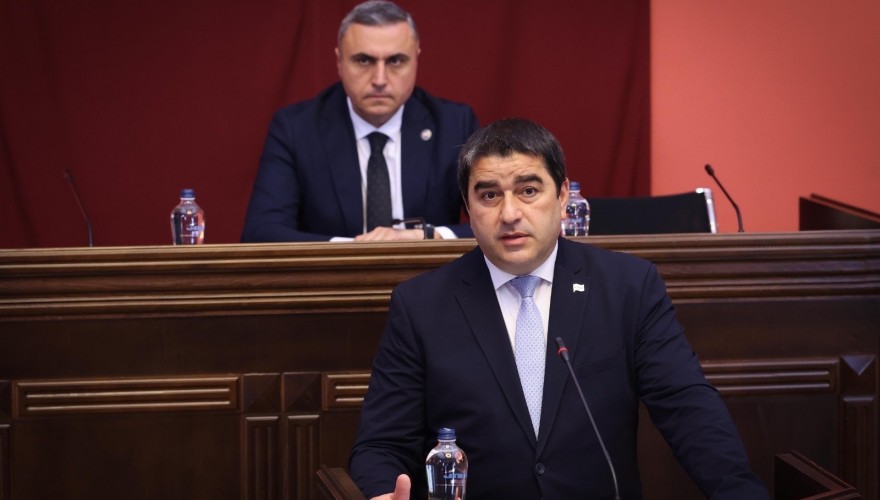
The Procedural Issues and Rules Committee considered, under an expedited procedure and at I reading, a draft Rules of Procedure of the Parliament of Georgia, together with related legislative proposals. The package was presented by the Speaker of Parliament, Shalva Papuashvili.
“Last May, the Parliament of Georgia adopted new Rules of Procedure that introduced significant procedural innovations and made parliamentary activities more efficient. Since then, we have held both autumn and spring sessions, observed how the provisions of the Rules functioned in practice, and identified procedures that could be further refined or updated. Accordingly, a package of legislative amendments has been prepared”, - Shalva Papuashvili stated.
According to the Speaker, the amendments clarify issues related to the procedures by which the Parliament’s plenary session, the Parliamentary Bureau, and other parliamentary bodies take note of various facts. These changes are primarily terminological in nature. In particular, the term “taking note” will be replaced by “submission for taking note.” In certain cases, the timing of the legal consequences associated with information taken into consideration by parliamentary bodies will also be amended or clarified. In addition, the procedure for a non-faction member of Parliament to join a committee will be specified.
Under the draft law, the provision requiring a recess from 3:00 p.m. to 4:00 p.m. during plenary sessions will be replaced with the following wording: “During a plenary session of Parliament, the Chairperson of the session may declare a recess as necessary”.
As noted by Shalva Papuashvili, the Parliamentary Bureau will be granted the authority to decide that a regular plenary session be held on another day during the plenary week.
The Speaker further explained that the initiator of a bill will be granted the right to withdraw it at any time before its adoption at III reading. Under the current regulation, this right exists only until the bill is adopted at I reading.
The amendments also stipulate that the procedure governing decisions on whether to continue consideration of draft laws and draft parliamentary resolutions submitted to a previous convocation of Parliament will likewise apply to international agreements submitted to Parliament for ratification, accession, denunciation, or termination.
The proposed changes further refine provisions governing the submission of comments on draft legislation. It is also envisaged that, following the completion of a third-reading consideration of a legislative package, all drafts within that package requiring the same voting threshold will be put to a single vote, unless a Member of Parliament requests separate voting on individual drafts before the vote is held.
The Speaker also explained that the rules governing the expedited consideration and adoption of draft laws are being clarified. Specifically, if the Parliamentary Bureau has decided to consider a draft law under an expedited procedure and its consideration has begun during a plenary session, but the draft is not adopted in all three readings within the same plenary week, consideration may continue under the expedited procedure during the following plenary week.
According to Shalva Papuashvili, provisions regulating the interpellation procedure are also being refined and improved both editorially and substantively. Among the key changes are:
- Tuesday will be added alongside Wednesday and Thursday as a day on which interpellations may be held;
- The deadline for submitting a written question under the interpellation procedure will be extended from 12:00 noon on the Wednesday preceding the plenary week to the end of that Wednesday; the deadline for transmitting the written question to its addressee will be extended to the end of the following day;
- It will be clarified that a plenary session on the day of an interpellation may begin with other matters and continue with the interpellation procedure; the Parliamentary Bureau, in consultation with the author of the written question and its addressee, will determine the timing of the interpellation.
The Speaker also noted that provisions relating to the discussion of various reports submitted to Parliament at plenary sessions are being clarified.
Another amendment concerns Article 200 of the Rules of Procedure and the election procedure for members of the Board of Trustees of the Public Broadcaster. Under the proposal, the procedure for establishing a competitive selection commission for trustee candidates will be abolished. Instead, candidates will be nominated directly by the entities authorized to nominate them. The Economic Policy Committee will be entrusted with examining candidates’ compliance with legal requirements, conducting public hearings, and issuing recommendations regarding their election or non-election as trustees.
The draft law also clarifies the procedure for hearing the Annual Report of the President of Georgia. Specifically, the procedure will conclude upon the completion of the President’s address to Parliament. Following the hearing, the plenary session may continue and proceed to consideration of other matters.
Shalva Papuashvili also presented another amendment included in the legislative package, concerning the Law on Normative Acts. According to the proposal, where a draft law is submitted as part of a legislative package, all draft laws within that package will be accompanied by a single explanatory note containing the relevant information about the package as a whole.
The Speaker further noted that amendments are also proposed to the Organic Law on the Public Defender of Georgia and the Law on the State Security Service of Georgia.
Shalva Papuashvili endorsed comments raised during the committee meeting regarding the possibility of establishing joint working groups by committees, as well as proposals to increase the speaking time allocated to the author of an interpellation question and for debates following the completion of the interpellation procedure. He stated that the relevant formulations would be presented during the first-reading consideration of the legislative package at a plenary session.
The Procedural Issues Committee supported forwarding the legislative amendment package for consideration by the Parliament in plenary session.