
Culture Committee Heard Information on Museum Activities
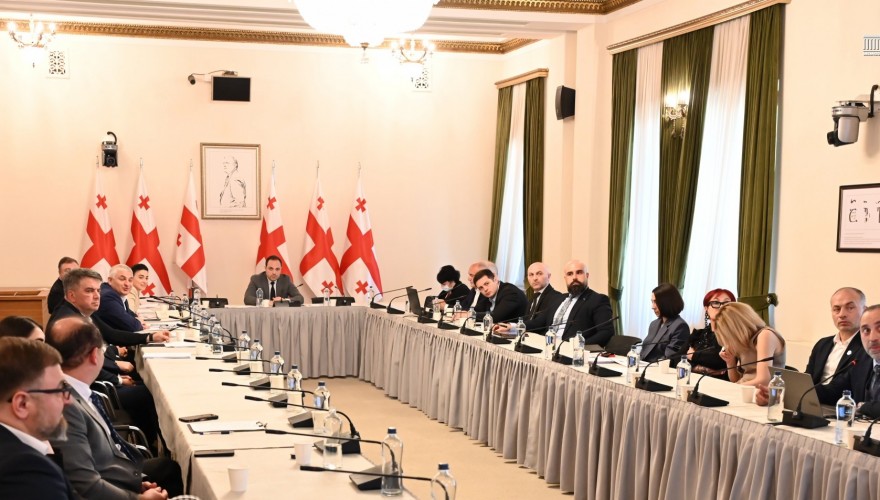
At a sitting of the Culture Committee, members heard reports on the activities carried out by the Georgian National Museum and the LEPL Georgian Palace Museums Association.
Information on the activities of the Georgian National Museum was presented by the museum’s Director General, David Lordkipanidze.
The speaker discussed the importance and functions of the Georgian National Museum, noting that it is the largest museum association in Georgia, uniting numerous museums and extensive cultural and scientific collections.
David Lordkipanidze focused on the directions of museum development, ongoing and planned projects, as well as the importance of storage facilities and the research center. According to him, strengthening the scientific and research activities of museums is an important prerequisite for the protection and promotion of cultural heritage.
Information on the activities of the LEPL Georgian Palace Museums Association was presented by its Director General, Giorgi Kalandia.
The speaker discussed ongoing and planned projects in various museums and cultural sites. According to him, restoration of the first floor of the Palace of David and Giorgi Eristavi is underway, and the opening of a permanent exhibition is planned by the end of 2026.
According to Giorgi Kalandia, the rehabilitation of the Queen’s Palace is planned at the Dadiani Palace. He also noted that in 2026, the Presidential Center of Zviad Gamsakhurdia was opened and is already functioning in Zugdidi, where a permanent exhibition has been arranged.
Speaking about the Art Palace of Georgia, the presenter stated that 14 paintings dating from the 15th to 19th centuries had been returned to Georgia. He also noted that the museum acquired six unique manuscripts, including letters by Napoleon Bonaparte and Alexandre Dumas.
According to Giorgi Kalandia, with the support of the Ministry of Culture, nine fundamental scholarly works and catalogues were published in 2025, while 16 exhibitions were also held.
The sitting also included information on the condition of museums subordinated to Georgian municipalities, presented by Deputy Regional Development Minister, Zurab Iashvili.
According to the speaker, more than 170 museum institutions operate under municipal administration. Zurab Iashvili spoke about the infrastructural needs facing museums.
He noted that significant rehabilitation works have been carried out in municipalities in recent years. Some museums were equipped with exhibition inventory and museum spaces were renovated. However, as the Deputy Minister stated, the need for repair and rehabilitation works remains a major challenge in a number of municipalities.
Zurab Iashvili also focused on the issues of inclusiveness and accessibility in museums. According to him, another significant challenge is the shortage of qualified personnel.
The Chair of the Culture Committee Giorgi Gabunia spoke about the importance of museum development and placed special emphasis on municipal museums.
According to him, the Culture Committee will work on recommendations concerning the vision for the development of municipal museums and the steps to be taken in this direction.
Giorgi Gabunia noted that museum development should not be limited solely to infrastructure renewal. According to him, it is important to ensure meaningful content, active functioning of museums, and the involvement of society — including young people and foreign visitors — in the promotion of the country’s cultural heritage.
The committee took note of the information presented at the session.