
Parliamentary Committees Heard 2025 Reports on the Execution of Judgments and Decisions of the European Court of Human Rights Concerning Georgia
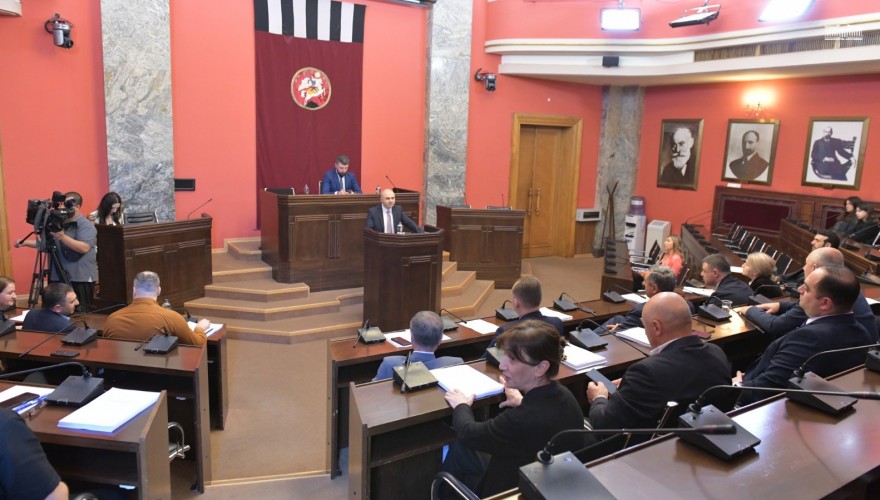
At a joint sitting, the Human Rights and Civil Integration, and the Legal Issues Committees heard the Ministry of Justice’s 2025 reports on the implementation of judgments and decisions delivered by the European Court of Human Rights (ECHR) against Georgia.
According to the presenter, First Deputy Justice Minister Beka Dzamashvili, as of 2026, there are 225 pending cases against Georgia before the European Court, which he described as a positive indicator.
“In 2011, more than 3,000 applications against Georgia were under consideration. Today, that number stands at only 225, representing a 93% decrease. Therefore, it can confidently be said that, as a result of the reforms carried out, society has a high level of trust in state institutions, particularly in the justice system. As for the statistics concerning the execution of judgments, since Georgia acceded to the European Convention and the European Court began issuing judgments concerning the country, violations have been found in 291 cases. Some of these cases remain under execution, while others have been fully implemented. 84% of the violations—243 cases—relate to the period before 2012”, - he stated.
According to Dzamashvili, 127 cases have been fully executed, of which 86% were implemented after 2013.
He further noted that, out of the 243 cases relating to the pre-2012 period, the majority of violations concerned the penitentiary system. In particular, nearly 100 cases involved issues such as murder, deaths in custody, torture, inhuman treatment, lack of medical care, and other serious violations.
The presenter stated that, outside the penitentiary system, the most frequently violated provisions were Articles 2 and 3 of the European Convention on Human Rights—namely, the right to life and the prohibition of torture.
While discussing ongoing cases, Beka Dzamashvili highlighted the Tsintsabadze Group, the Identoba Group, and the Tkhelidze Group of cases, which relate to domestic violence and related human rights concerns.
According to Dzamashvili, based on the number of applications lodged against Georgia last year, the country performed better than 29 European states, 19 of which are members of the European Union.
“If these figures are recalculated on a per capita basis and compared accordingly, Georgia ranks ahead of 27 countries in terms of the lower number of applications submitted against it. Fourteen of those 27 countries are EU member states”, - he noted.
After reporting, the First Deputy Minister answered questions from Members of Parliament.