Two Draft Laws on Broadcasting discussed by the Sector Economy and Economic Policy Committee
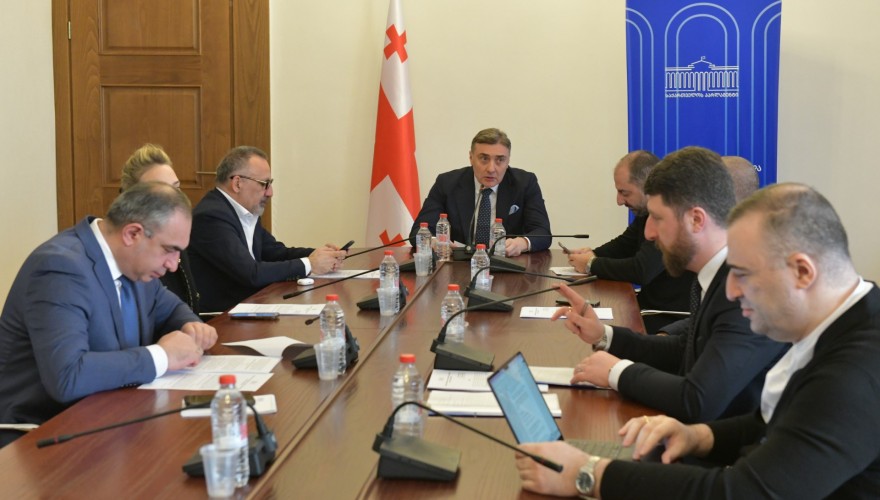
The Sector Economy and Economic Policy Committee discussed the Draft Law on Broadcasting for the I reading. The reporter, Archil Gorduladze, the Chair of the Legal Issues Committee, reviewed the amendments, which envisaged improving the accuracy of the facts in the news program. The Draft Law also determines the standard for clearly dissociating the facts from the comments.
The expression of the positions in the news programs, other than the author’s program, shall be restricted upon broadcasting public policy issues.
The Draft Law improves the standard of the author’s program. The audience will be informed that the program is by the author, and the author’s program will adequately introduce all alternative positions. The amendments also establish a clear legal framework for ensuring privacy. As the Draft Law envisages, special attention will be paid to the privacy of minors. The document also establishes the British standard for obtaining information and/or the program by covert methods. Additionally, the covert recording standard on private property shall be stipulated.
Per the reporter, broadcasters are already obligated to adhere to impartiality. The novelty of the document is that if the current edition envisages self-regulation of the hereof issue, and broadcasters shall, at their discretion, assess whether the fact is accurate or forged, or whether journalistic ethics are ensured, the amendments allow the person concerned to address the National Communications Commission.
“The enactment of the introduced legal amendments will establish the mechanism improving the legal framework to ensure the adherence to the accuracy of facts, justice and impartiality, and restricting the dissemination of information with violation of the age limit requirements, or broadcasting war and war propaganda; this mechanism will protect the freedom of speech and expression, also freedom of broadcasting. The amendments ensure the right of society to receive accurate and proper information, including with high impartiality standard in line with the legal requirements as applied in Britain”, - he stated.
The Committee endorsed the Draft law and discussed yet another Draft on Broadcasting for the I reading. The second Draft restricts the direct or indirect financing of the broadcaster from international sources other than commercials, teleshopping, sponsorship and the promotion of services or products. Besides, the Draft restricts the acquisition of broadcasting programs and services by foreign forces and/or direct or indirect financing (co-financing) of the live broadcast.
The Draft was introduced by Rati Ionatamishvili, the Chair of the Human Rights and Civil Integration Committee.
“The challenges are indeed substantial and acute when external funding facilitates media control. Regrettably, this practice does not serve the interests of society or the state but rather enables the manipulation of public opinion, including disinformation etc. Regarding the dissemination of disinformation, there are numerous examples in Georgia. Media independence is only upheld when it serves the interests of Georgian society, and democracy is robust only when information is accessible to the public and reliable”, - he stated.
The Committee endorsed the Draft.